Factory employees are frequently exposed to workplace conditions such as industrial noise, dust, chemicals, heat, physical strain, and repetitive movements. Over time, these exposures can affect their health, sometimes without noticeable symptoms during the early stages.
Therefore, conducting regular factory employee health checkups is an important part of occupational health management. These examinations help identify potential health concerns, monitor work-related exposures, and assess an employee’s medical fitness for specific job responsibilities.
However, one common question among HR Managers, EHS Officers, and factory management teams is: What medical tests should be included in a factory employee health checkup?
The answer depends on several factors, including the employee’s job role, age, medical history, workplace hazards, and applicable occupational health regulations.
This article explains the commonly included medical tests, their importance, and how factories can select appropriate health checkup packages.
Why Are Medical Checkups Important for Factory Employees?
Unlike general health screening, an occupational medical examination considers both an employee’s overall health and the risks associated with their working environment.
For example, employees working in noisy production areas may require hearing assessments, while those exposed to industrial dust or fumes may need respiratory health evaluations.
Regular employee medical examinations help organizations:
- Identify potential occupational health problems at an early stage.
- Monitor employees exposed to harmful workplace conditions.
- Assess medical fitness for specific job responsibilities.
- Detect conditions such as hypertension, diabetes, and respiratory disorders.
- Maintain occupational health records and monitor changes over time.
- Support compliance with applicable workplace health and safety regulations.
Most importantly, medical examinations can help factories identify health risks before they develop into more serious concerns.
What Medical Tests Should Be Included in a Factory Employee Health Checkup?
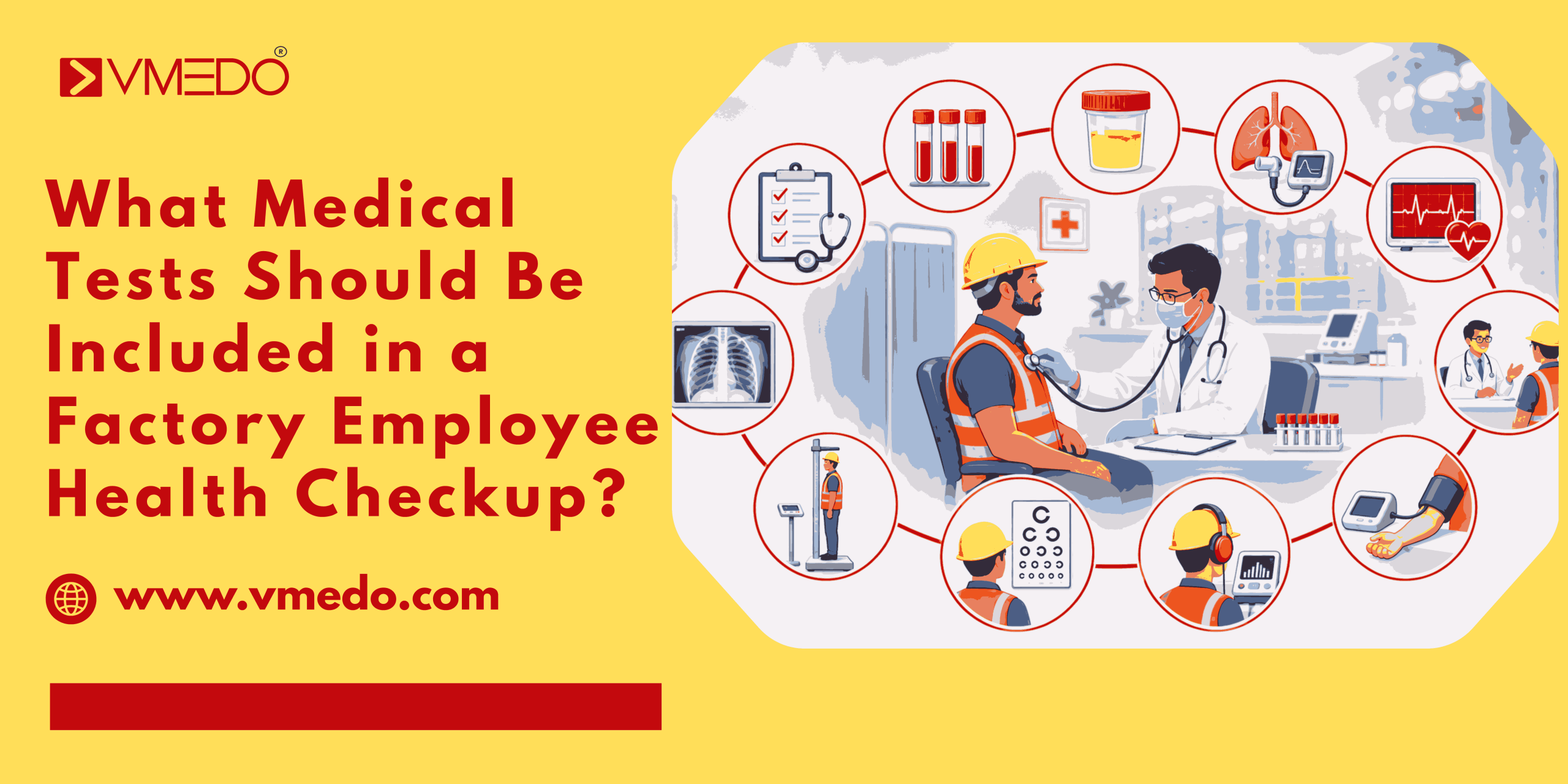
A comprehensive factory employee medical examination may include general health assessments, laboratory investigations, and occupational risk-specific tests.
The following are commonly considered tests for factory employee health checkup programs.
1. General Physical Examination
A general physical examination forms the foundation of an employee health checkup.
During this examination, a qualified medical practitioner evaluates the employee’s overall health and reviews relevant medical and occupational history.
Common assessments include:
- Blood Pressure (BP)
- Height, weight, and Body Mass Index (BMI)
- Pulse rate
- Medical and occupational history
- Respiratory and cardiovascular assessment
- Musculoskeletal health evaluation
These assessments help identify common health concerns and determine whether additional investigations are necessary.
2. Complete Blood Count (CBC)
A Complete Blood Count (CBC) is a commonly included laboratory investigation in employee medical examination packages.
It measures different components of the blood, including red blood cells, white blood cells, haemoglobin, and platelets.
Why is it important?
A CBC may help identify conditions such as anaemia and certain blood-related abnormalities.
For employees working in physically demanding environments, identifying significant anaemia or other medical concerns may be relevant to their overall health assessment.
However, a CBC alone cannot establish whether a condition is caused by workplace exposure.
3. Blood Sugar Test
Diabetes and abnormal blood glucose levels can affect an employee’s long-term health.
Therefore, blood glucose screening is frequently considered during factory employee health checkups, particularly according to age and individual risk factors.
Common tests include:
- Fasting Blood Sugar (FBS)
- Random Blood Sugar (RBS), where appropriate
- HbA1c, when clinically indicated
These investigations help identify elevated blood glucose levels and support further medical evaluation when required.
4. Pulmonary Function Test (PFT)
A Pulmonary Function Test (PFT) evaluates how effectively the lungs function.
Spirometry, a commonly used pulmonary function test, measures airflow and lung capacity.
This assessment is particularly relevant for employees exposed to:
- Industrial dust
- Welding fumes
- Chemical vapours
- Cement and mineral dust
- Other respiratory irritants
PFT screening may be considered for workers in manufacturing facilities, foundries, chemical industries, and dust-producing operations.
Importantly, abnormal spirometry findings require medical interpretation and, where necessary, further respiratory evaluation.
5. Audiometry Test
Continuous exposure to high industrial noise levels can gradually affect an employee’s hearing ability.
An audiometry test evaluates hearing sensitivity at different sound frequencies and can help detect hearing changes associated with occupational noise exposure.
Audiometry is particularly relevant for employees working near:
- Heavy industrial machinery
- Press machines
- Compressors
- Industrial generators
- High-noise production equipment
Periodic hearing assessments also allow medical professionals to compare current results with previous records and identify significant changes.
Where hearing deterioration is detected, factories should also review workplace noise controls and hearing protection measures.
6. Vision and Eye Examination
Good vision is particularly important for employees performing precision work or operating machinery.
Vision screening helps identify visual difficulties that may affect an employee’s ability to perform specific tasks safely.
Common vision assessments include:
- Distance vision
- Near vision
- Colour vision
- Visual acuity with and without corrective glasses, where relevant
Colour vision assessments may be important for employees whose tasks involve identifying colour-coded electrical wiring, signals, or safety indicators.
The required visual standards should be based on the employee’s actual job responsibilities.
7. Electrocardiogram (ECG)
An Electrocardiogram (ECG) records the electrical activity of the heart.
It can help identify certain heart rhythm disturbances and other electrical abnormalities that may require medical evaluation.
An ECG may be considered for employees with:
- Relevant cardiovascular symptoms
- Known heart disease
- Specific cardiovascular risk factors
- Clinical indications identified during examination
An ECG is not automatically necessary for every asymptomatic factory worker. Its inclusion should depend on medical assessment and applicable job-specific requirements.
8. Urine Routine Examination
A urine routine examination is another investigation commonly included in employee medical checkup packages.
Urinalysis may identify abnormalities such as glucose, protein, or blood in the urine.
These findings can provide useful information about certain metabolic, urinary, or kidney-related health conditions.
However, abnormal results may require additional testing before a diagnosis can be established.
9. Liver Function Test (LFT) and Kidney Function Test (RFT/KFT)
These assessments may be included when medically appropriate or valid.
LFT: Evaluates biochemical markers associated with liver health.
Renal or Kidney Function Test (RFT/KFT): Assesses markers such as creatinine and other parameters relevant to kidney function.
These investigations may be particularly relevant for employees exposed to substances that can affect the liver or kidneys.
The appropriate tests should be selected according to the specific chemical exposure and medical surveillance requirements, rather than using identical laboratory panels for every worker.
10. Chest X-Ray
A chest X-ray provides images of the lungs and surrounding chest structures.
It may be used as part of occupational respiratory health surveillance for workers exposed to certain hazardous dusts or other respiratory hazards.
For example, workers exposed to respirable crystalline silica may require specific medical surveillance under applicable occupational health standards.
However, routine chest X-rays are not recommended for every factory employee without an appropriate medical or occupational indication.
The need and frequency of imaging should be determined by a qualified medical professional and applicable regulatory requirements.
Factory Employee Health Checkup Tests: Quick Reference Checklist
The following table summarizes commonly considered investigations and their relevance to factory employee health screening.
| Medical Test | Purpose | Typical Consideration |
|---|---|---|
| General Physical Examination | Overall health and job-related medical assessment | Broad baseline assessment |
| CBC | Identifies anaemia and certain blood abnormalities | According to clinical or screening protocol |
| Blood Sugar | Screens for abnormal glucose levels | Based on age and diabetes risk |
| PFT / Spirometry | Assesses respiratory function | Dust, fumes, and respiratory exposures |
| Audiometry | Evaluates hearing sensitivity | Noise-exposed employees |
| Vision Test | Evaluates eyesight and colour discrimination | Machine operators and precision work |
| ECG | Evaluates cardiac electrical activity | When clinically or occupationally indicated |
| Urine Routine | Identifies selected urinary abnormalities | According to medical assessment |
| LFT / RFT | Assesses liver and kidney-related markers | Selected chemical exposures or clinical indications |
| Chest X-Ray | Supports evaluation of certain respiratory conditions | Specific occupational or medical indications |
Note: This table is an indicative checklist, not a universally mandatory medical test package. The final examination protocol should be developed according to occupational exposure, medical recommendations, and applicable statutory requirements.
Additional Medical Tests Based on Factory Work and Occupational Hazards
Different factories present different health risks. Therefore, medical examination packages should be customized according to the nature of industrial operations.
| Industry / Work Environment | Potential Health Risks | Relevant Medical Assessments |
|---|---|---|
| Foundries and Metal Industries | Dust, fumes, heat, noise | PFT, audiometry, respiratory examination and other exposure-specific tests |
| Chemical Manufacturing | Chemical exposure and potential organ toxicity | Exposure-specific blood or urine investigations, LFT/RFT when indicated |
| Textile Industries | Dust and industrial noise | Respiratory assessment, PFT and audiometry |
| Automobile Manufacturing | Noise, welding fumes, solvents | Audiometry, PFT and exposure-specific assessments |
| Food Processing Industries | Food hygiene and communicable disease concerns | Medical examination, skin assessment and additional tests as required |
| Construction Material Industries | Cement and mineral dust | Respiratory assessment, PFT and chest imaging when indicated |
| Warehouses and Logistics | Manual handling, driving and ergonomic strain | Musculoskeletal assessment, vision and role-specific fitness evaluation |
In addition, employees exposed to particular substances may require specialized biological monitoring.
For example, workers exposed to lead may need blood lead level assessments, while certain pesticide exposures may require cholinesterase testing.
Such investigations should be selected according to the actual substance handled, exposure assessment, medical guidance, and applicable regulations.
Are Factory Employee Medical Checkups Mandatory in India?
Occupational medical examinations are an important component of industrial health and safety compliance in India.
Historically, the Factories Act, 1948, particularly its provisions concerning hazardous processes and dangerous operations, established medical surveillance responsibilities for certain categories of workers.
The Occupational Safety, Health and Working Conditions Code, 2020 (OSHWC Code) came into force on 21 November 2025 and provides the current central legislative framework.
Under Section 6(1)(c), employers must provide free annual health examinations or tests to the categories of employees prescribed by the appropriate government.
Furthermore, Sections 82 and 85 address medical examination requirements associated with dangerous operations and hazardous processes.
The Ministry of Labour and Employment has clarified that workers engaged in hazardous processes and dangerous operations may require pre-employment and periodic examinations irrespective of age, subject to the applicable rules.
Does Every Factory Employee Need the Same Medical Tests?
No. There is no single medical test panel that automatically applies to every factory employee.
The selection of tests and their frequency depend on:
- Applicable Central and State occupational health regulations.
- The nature of the industrial process.
- Exposure to dust, noise, chemicals, or other hazards.
- The employee’s age, job responsibilities, and medical history.
- Recommendations from a qualified occupational health practitioner.
Therefore, HR and EHS teams should verify the applicable State rules and consult a qualified Factory Medical Officer when planning employee medical examinations.
How Often Should Factory Employees Undergo Medical Checkups?
Factory employee medical examinations can be organized at different stages of employment.
Pre-Employment Medical Examination
Conducted before employment or assignment to specified work to assess an individual’s medical fitness for the relevant job responsibilities.
Periodic Medical Examination
Conducted at prescribed or medically recommended intervals to monitor changes in employee health, particularly those associated with occupational exposure.
Special Medical Examination
Conducted when specific health concerns, suspected occupational diseases, or unusual workplace exposures require further medical assessment.
Certain hazardous operations may require more frequent examinations than a general annual health checkup.
For a detailed comparison, read about employee medical examination services and the importance of occupational health surveillance.
How Should HR and EHS Teams Select a Factory Employee Health Checkup Package?
Selecting an appropriate health checkup package involves more than choosing a list of laboratory tests.
A structured approach should include:
1. Identify workplace hazards: Review occupational risks associated with each department, process, and job role.
2. Categorize employees: Group employees according to occupational exposure, medical surveillance requirements, and relevant clinical factors.
3. Select appropriate medical tests: Choose investigations based on identified health risks and professional medical recommendations.
4. Arrange qualified medical professionals: Ensure examinations and medical fitness assessments are performed by appropriately qualified practitioners.
5. Maintain medical records: Preserve relevant examination findings and occupational health records securely in accordance with applicable requirements.
6. Plan follow-up evaluations: Ensure employees with abnormal findings receive appropriate medical advice, referrals, and follow-up.
Medical examination findings should also be used to improve workplace preventive measures, rather than focusing only on individual employee fitness.
Factory Employee Medical Examination Services by VMEDO Healthcare
Organizing medical examinations for a large industrial workforce requires coordination between HR teams, EHS departments, medical professionals, and diagnostic service providers.
VMEDO Healthcare provides occupational medical examination services for factories, manufacturing facilities, industrial establishments, and corporate workplaces.
Our services include:
- Pre-employment and periodic employee medical examinations.
- On-site employee health checkup camps.
- Blood and urine sample collection.
- PFT, audiometry, ECG, and vision screening.
- Customized health checkup packages based on occupational risks.
- Medical evaluation and fitness reporting.
- Digital medical records and examination documentation.
- Coordination of additional investigations where required.
VMEDO helps organizations plan structured employee medical examinations while supporting occupational health monitoring and applicable compliance requirements.
Looking to organize a factory employee health checkup?
Connect with VMEDO Healthcare to discuss customized employee medical examination packages for your factory.
Frequently Asked Questions (FAQs)
1. What are the basic medical tests included in a factory employee health checkup?
Commonly considered tests include general physical examination, CBC, blood sugar, urine routine, vision screening, PFT, and audiometry. Additional investigations such as ECG, LFT, RFT, and chest X-ray may be included based on clinical or occupational indications.
2. Is a PFT mandatory for all factory employees?
No. A PFT is particularly relevant for employees exposed to respiratory hazards such as industrial dust, fumes, and certain chemicals. Whether it is mandatory depends on the applicable occupational health rules and the employee’s job-related exposure.
3. Is an audiometry test necessary for factory workers?
Audiometry is an important component of hearing conservation and medical surveillance for employees exposed to hazardous industrial noise. Its requirement and frequency depend on exposure conditions and applicable regulations.
4. Is a chest X-ray required during every annual factory health checkup?
No. Chest X-rays should be conducted when medically or occupationally indicated, including where specific respiratory surveillance requirements apply.
5. Who should determine the medical test package for factory employees?
An appropriately qualified medical practitioner, ideally with occupational health expertise, should determine the test package in consultation with the employer’s HR and EHS teams, based on workplace hazards and applicable regulations.
6. Can factory employee medical examinations be conducted on-site?
Yes. Many assessments, including physical examinations, sample collection, PFT, audiometry, vision screening, and ECG, can be arranged on-site with suitable equipment and qualified personnel. Other investigations may require a diagnostic facility.
Factories should design employee health checkups based on the specific health risks associated with each employee’s workplace and job responsibilities.
While general assessments help identify common medical concerns, occupational health investigations such as PFT, audiometry, vision screening, and exposure-specific laboratory tests play an important role in monitoring workplace-related risks.
Therefore, rather than selecting a standard medical package for every employee, factories should adopt a risk-based medical examination program supported by qualified healthcare professionals.
With structured occupational medical examinations, appropriate follow-up, and proper health record management, organizations can strengthen employee health monitoring and support safer working environments.
VMEDO – Occupational Health & Wellness Expert!