


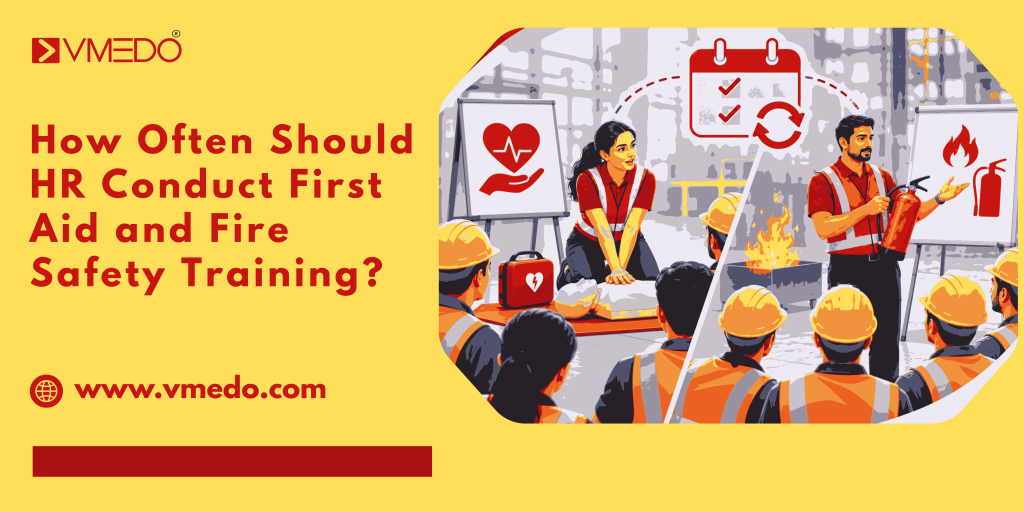
Workplace emergencies can occur without warning. From sudden medical emergencies to fire accidents, employees must know how to respond safely and effectively. Therefore, conducting regular first aid and fire safety training is an important responsibility for HR and workplace safety teams.
However, a common question among HR managers is: How often should organisations conduct first aid and fire safety training?
The answer depends on several factors, including workplace hazards, employee strength, applicable safety regulations and the nature of business operations.
This article explains the recommended training frequency, relevant Indian workplace safety requirements and how HR professionals can develop an effective training schedule.
Why Is Regular First Aid and Fire Safety Training Important?
Simply conducting a safety training programme once does not guarantee long-term emergency preparedness. Over time, employees may forget important procedures, while workplace risks and emergency response arrangements may change.
Regular training helps organisations:
- Maintain employee awareness of emergency response procedures.
- Improve confidence in handling workplace medical emergencies.
- Familiarise employees with fire evacuation procedures.
- Reinforce practical CPR, AED and first aid skills.
- Prepare designated emergency response teams.
- Support compliance with applicable workplace safety regulations.
Additionally, refresher programmes allow employees to practise essential skills and stay familiar with updated safety procedures.
How Often Should HR Conduct First Aid Training?
The frequency of first aid training depends on applicable regulations, certification requirements and workplace risks.
1. Initial First Aid Training
Organisations should provide appropriate first aid awareness during employee induction and arrange formal training for designated first aiders.
Initial training may include:
- Basic first aid principles and emergency assessment.
- Cardiopulmonary Resuscitation (CPR).
- Automated External Defibrillator (AED) awareness and usage.
- Management of bleeding, burns and fractures.
- Choking and other medical emergencies.
- Emergency communication and ambulance coordination.
Furthermore, employees working in higher-risk environments may require additional training specific to their occupational hazards.
2. First Aid Refresher Training
Under Rule 54(iv) of the Occupational Safety, Health and Working Conditions (Central) Rules, 2026, establishments covered by the rule must provide first aid refresher training every three years.
The same provision specifies first aid training for at least 33% of workers in covered establishments.
However, these Central Rules do not automatically apply to every private factory in India. Employers must verify the rules applicable to their establishment under the appropriate Central or State Government framework.
From a practical workplace safety perspective, HR teams can also organise brief annual refresher sessions to reinforce important first aid skills.
Recommended approach: Conduct formal refresher training within the applicable regulatory or certification period and consider annual practical refreshers based on workplace risks.
How Often Should HR Conduct Fire Safety Training?
Fire safety training helps employees recognise fire hazards, understand evacuation procedures and respond appropriately during fire-related emergencies.
Unlike first aid refresher training, there is no single training interval that applies uniformly to every workplace in India.
The frequency depends on the applicable fire safety regulations, building occupancy, industrial processes and emergency preparedness requirements.
1. Initial Fire Safety Training
Employees should receive basic fire safety orientation when joining an organisation.
Training should cover:
- Common workplace fire hazards.
- Fire prevention measures.
- Fire alarm and emergency reporting procedures.
- Emergency exits and evacuation routes.
- Assembly points and evacuation responsibilities.
- Safe use of fire extinguishers by appropriately trained personnel.
2. Periodic Fire Safety Refresher Training
As a practical recommendation, organisations can conduct fire safety refresher training every 6 to 12 months, depending on the workplace risk assessment.
For example, manufacturing units handling combustible materials, chemicals or high-temperature equipment may benefit from more frequent sessions.
Meanwhile, lower-risk office environments may adopt annual refresher programmes, subject to applicable legal requirements.
Importantly, these suggested intervals represent good safety practices rather than a universal statutory requirement.
How Often Should Workplaces Conduct Fire Safety Mock Drills?
Fire safety training and emergency mock drills serve different purposes.
While training develops knowledge and response skills, mock drills test how effectively employees follow emergency procedures during simulated incidents.
Under Rule 59 of the OSHWC (Central) Rules, 2026, covered factories and specified other establishments must conduct emergency preparedness mock drills quarterly.
Additionally, the Manufacture, Storage and Import of Hazardous Chemicals Rules, 1989, require establishments covered by the relevant on-site emergency planning provision to conduct mock drills every six months.
Consequently, HR and EHS teams must identify the specific requirements applicable to their workplace rather than assuming that one drill frequency applies to all organisations.
Recommended First Aid and Fire Safety Training Schedule for HR
The following schedule can help HR professionals develop an internal workplace safety training calendar.
| Training Activity | Suggested Frequency |
|---|---|
| Basic safety orientation | During employee induction |
| Formal first aid training | On designation as a first aider |
| First aid refresher training | Every 3 years where applicable under the Central Rules; earlier if required |
| First aid practical refresher | Annually, as a recommended practice |
| Fire safety refresher training | Every 6–12 months, based on workplace risks |
| Emergency mock drills | Quarterly where Rule 59 of the Central Rules applies |
| Emergency Response Team (ERT) refresher | Every 6–12 months or based on risk assessment |
Note: This is an indicative planning schedule. Statutory requirements, site-specific emergency plans and applicable State rules take priority over general recommendations.
When Should HR Conduct Additional Safety Training?
Apart from scheduled programmes, certain workplace changes may require additional first aid and fire safety training.
1. Recruitment of New Employees
New employees should understand emergency procedures, first aid arrangements and evacuation routes before working independently in hazardous areas.
2. Changes in Workplace Operations
The introduction of new machinery, chemicals, manufacturing processes or workplace layouts may create additional risks.
Therefore, organisations should review training requirements whenever significant operational changes occur.
3. Following Workplace Accidents or Near Misses
Accidents and near-miss incidents may reveal gaps in emergency preparedness.
As a result, HR and EHS teams should review the incident findings and arrange targeted refresher training wherever necessary.
4. Changes in Emergency Response Teams
When trained first aiders, fire wardens or emergency response personnel leave or change roles, organisations should train suitable replacements.
5. Poor Performance During Mock Drills
If employees struggle with evacuation procedures, emergency communication or response responsibilities, additional practical training may help address the identified gaps.
What Are HR’s Responsibilities in First Aid and Fire Safety Training?
Although employers hold the relevant statutory obligations, HR teams often coordinate workplace safety training alongside EHS officers, safety committees and management.
Key responsibilities include:
- Identifying employees who require safety training.
- Preparing an annual training calendar.
- Coordinating with qualified training providers.
- Maintaining records of attendance and training completion.
- Tracking certification validity and refresher requirements.
- Ensuring adequate training coverage across shifts.
- Including relevant contract workers in safety training arrangements.
- Coordinating emergency drills and documenting observations.
Moreover, HR teams should periodically review training effectiveness rather than focusing only on the number of sessions conducted.
How Can Organisations Make Safety Training More Effective?
Effective first aid and fire safety training should focus on practical learning rather than theoretical presentations alone.
Organisations can improve training outcomes by incorporating hands-on CPR practice, AED demonstrations, fire extinguisher familiarisation, simulated emergency scenarios and structured evacuation drills.
Additionally, training content should reflect the specific hazards present at the workplace.
For instance, employees in manufacturing facilities may require training related to machinery injuries, burns and chemical exposure. Similarly, office employees may benefit from training focused on cardiac emergencies, evacuation procedures and basic fire prevention.
Frequently Asked Questions (FAQs)
1. Is first aid training mandatory for factory employees in India?
Factories must comply with the first aid training and emergency preparedness requirements applicable to their establishment. Rule 54(iv) of the OSHWC Central Rules, 2026, specifies training for at least 33% of workers in establishments covered by those rules. Requirements may differ under applicable State rules.
2. How often should employees undergo first aid refresher training?
The OSHWC Central Rules, 2026, specify refresher training every three years for covered establishments. However, organisations may conduct additional annual practical refreshers to maintain employee preparedness.
3. Should fire safety training be conducted every year?
Annual fire safety training is a reasonable practice for many workplaces. However, higher-risk establishments may require more frequent training, while applicable regulations may prescribe specific requirements.
4. How often should factories conduct fire safety mock drills?
Rule 59 of the OSHWC Central Rules, 2026, requires quarterly emergency preparedness mock drills for covered factories and specified establishments. Other applicable regulations may impose additional requirements.
5. Should contract workers receive first aid and fire safety training?
Yes. Organisations should include contract workers in relevant induction and emergency preparedness training based on their workplace exposure, assigned duties and applicable legal requirements.
Regular first aid and fire safety training plays an important role in maintaining workplace emergency preparedness.
While formal first aid refresher training under the applicable Central Rules follows a three-year interval, organisations should also consider annual practical refreshers. Similarly, fire safety training and mock drills should follow workplace risk assessments and applicable regulatory requirements.
By establishing a structured training calendar, HR professionals can strengthen employee awareness, maintain emergency response readiness and support workplace safety compliance.
Strengthen Workplace Emergency Preparedness with VMEDO
VMEDO Healthcare provides professional First Aid, CPR, AED and Fire Safety Training programmes for corporate offices, factories and industrial establishments.
Our training programmes focus on practical emergency response skills, workplace safety awareness and employee preparedness.
Whether your organisation requires initial employee training, refresher programmes or workplace emergency response training, VMEDO can help you plan suitable sessions based on your operational requirements.
Contact VMEDO Healthcare to organise First Aid and Fire Safety Training for your employees.
Website: https://vmedo.com
Legal References and Resources
- OSHWC Code, 2020 – Employer responsibilities concerning workplace health, safety and training.
- OSHWC (Central) Rules, 2026, Rule 54 – First aid arrangements and refresher training requirements.
- OSHWC (Central) Rules, 2026, Rule 59 – Emergency preparedness mock drill requirements.
- Manufacture, Storage and Import of Hazardous Chemicals Rules, 1989 – On-site emergency planning and mock drills for covered establishments.
Disclaimer: Training and emergency drill requirements depend on the establishment’s jurisdiction, industry, workplace hazards and applicable Central or State rules. Employers should verify current legal requirements before finalising their compliance schedule.