


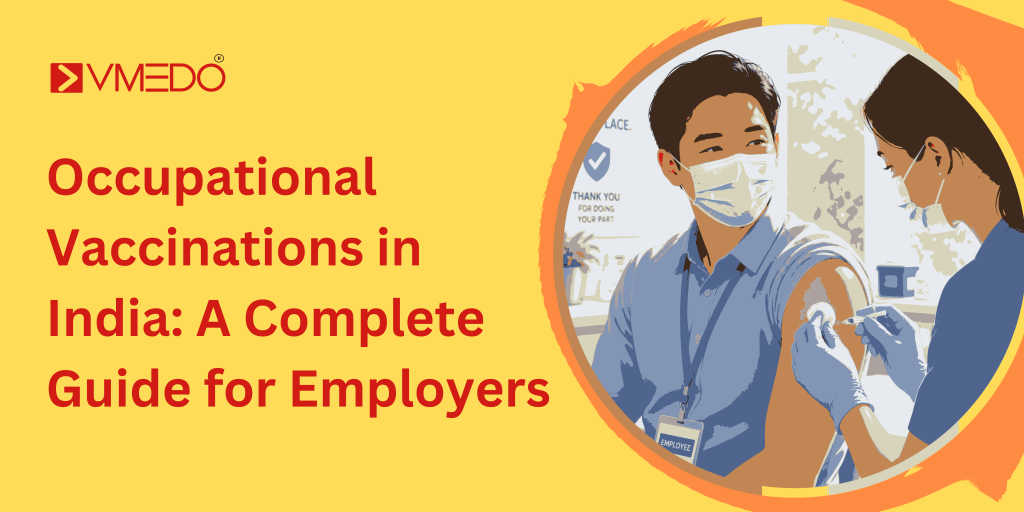
Healthy employees are the foundation of a productive workplace. While organizations invest significantly in safety equipment, medical facilities, and wellness programs, one preventive measure often receives less attention: occupational vaccinations.
Employees are exposed to different occupational hazards depending on their industry. These hazards are not limited to machinery, chemicals, or physical injuries. Biological hazards such as viruses and bacteria can also pose serious health risks.
A well-planned workplace vaccination program protects employees before exposure occurs, helping organizations reduce illness, absenteeism, healthcare costs, and business disruptions.
This guide explains everything employers in India should know about occupational vaccinations.
What Are Occupational Vaccinations?
Occupational vaccinations are vaccines provided to employees based on the risks associated with their profession.
Unlike routine childhood immunization, occupational vaccines are administered specifically to reduce workplace-related disease exposure.
These vaccinations are generally recommended after a workplace health risk assessment identifies potential biological hazards.
Why Occupational Vaccination Matters
Vaccinations are one of the most cost-effective preventive healthcare measures available.
For employers, workplace vaccination programs help achieve several important objectives like:
Protect Employee Health:
Vaccines significantly reduce the risk of serious infectious diseases among employ
Reduce Sick Leave:
Vaccinated employees are less likely to contract preventable illnesses, reducing absenteeism and maintaining workforce productivity.
Prevent Workplace Outbreaks:
Infections can spread rapidly in offices, factories, hospitals, laboratories, and industrial facilities.
Vaccination minimizes outbreak risks.
Improve Business Continuity:
Healthy employees mean fewer operational disruptions, particularly during seasonal outbreaks or infectious disease events.
Support Employee Well-being:
Vaccination programs demonstrate an organization’s commitment to employee health, improving morale and retention.
Industries That Should Prioritize Occupational Vaccinations
Although every workplace can benefit from vaccination, some industries face significantly higher biological exposure.
Healthcare:
- Doctors
- Nurses
- Lab technicians
- Paramedics
- Housekeeping staff
- Ambulance personnel
Manufacturing:
- Food manufacturing
- Chemical industries
- Automobile manufacturing
- Textile industries
- Electronics manufacturing
- Heavy engineering
Pharmaceutical Companies:
- Research laboratories
- Manufacturing plants
- Quality control teams
- Packaging departments
Food Processing Industry:
Employees handling food are vulnerable to diseases that can affect food safety.
Waste Management:
- Biomedical waste handlers
- Sanitation workers
- Municipal workers
Construction:
Workers frequently sustain injuries, increasing tetanus risk.
Agriculture
Workers are exposed to animal-borne diseases and environmental pathogens.
Common Occupational vaccinations Recommended in India
1. Hepatitis B Vaccine
Recommended For
- Healthcare workers
- Laboratory staff
- Emergency responders
- Dialysis staff
- Employees exposed to blood or body fluids
Schedule: 3 doses: 0 – 1 – 6 Schedule
2. Tetanus and Diphtheria (Td/Tdap)
Recommended for:
- Construction workers
- Industrial workers
- Factory employees
- Maintenance teams
- Field staff
1st dose in adulthood if not previously received followed by booster dose every 10 year.
3.Influenza Vaccine
Annual vaccination recommended for:
- Corporate employees
- Healthcare workers
- Senior employees
- Employees with chronic illnesses
- Customer-facing staff
4. Typhoid Vaccine
Recommended for:
- Food handlers
- Catering staff
- Hospital kitchen employees
- Municipal workers
5. Hepatitis A Vaccine
Recommended for:
- Food industries
- Hospitality
- Sanitation workers
- Travel-intensive employees
6. Rabies Vaccine
Recommended for:
- Veterinarians
- Animal handlers
- Zoo workers
- Municipal dog control teams
7. MMR Vaccine
Protects against:
Particularly important for healthcare workers.
8. Varicella Vaccine
Recommended for employees without documented evidence of immunity to chickenpox, especially healthcare staff.
9. COVID-19 Vaccination
Depending on prevailing public health recommendations and organizational policies, COVID-19 vaccination remains an important preventive measure for many workplaces.
Occupational Vaccination Risk Matrix
| Industry | Recommended Vaccines |
| Hospitals | Hepatitis B, Influenza, MMR, Varicella, COVID-19 |
| Manufacturing | Td/Tdap, Influenza, Hepatitis B |
| Food Industry | Hepatitis A, Typhoid, Influenza |
| Construction | Td/Tdap |
| Laboratories | Hepatitis B, MMR, Varicella |
| Waste Management | Hepatitis B, Tetanus, Typhoid |
| Veterinary | Rabies, Tetanus |
How Employers Should Plan Workplace Vaccination Drives
A successful vaccination program involves much more than administering vaccines.
Step 1: Conduct Risk Assessment
Evaluate biological hazards based on:
- Job roles
- Work environment
- Exposure risks
- Medical history
- Industry requirements
Step 2: Identify Eligible Employees
Classify employees according to occupational exposure.
Not every employee requires every vaccine.
Step 3: Verify Vaccination History
Review existing vaccination records to avoid unnecessary repeat doses
Step 4: Schedule Onsite Vaccination
Onsite vaccination significantly improves participation compared to offsite clinics.
Step 5: Maintain Vaccination Records
Document:
- Employee details
- Vaccine administered
- Batch number
- Expiry date
- Dose number
- Vaccinator details
- Digital certificates
Step 6: Follow-Up Doses
Certain vaccines require multiple doses.
Employers should maintain reminders for:
- Hepatitis B
- Rabies
- Other multi-dose vaccines
Are Occupational vaccinations Mandatory in India?
India does not have a single law mandating a universal occupational vaccination schedule for all industries.
However, employers have a legal and ethical responsibility to provide a safe workplace. Depending on the industry, vaccination may be recommended through occupational health policies, infection control guidelines, or sector-specific standards. Organizations should also consider guidance from health authorities and industry best practices when designing vaccination programs.
For healthcare institutions and high-risk industries, occupational immunization is widely regarded as a key component of employee health and safety.
Benefits of Corporate Vaccination Programs
Organizations implementing vaccination programs experience several measurable advantages.
- Lower absenteeism
- Fewer infections
- Improved workforce productivity
- Reduced healthcare costs
- Safer work environment
- Better employee satisfaction
- Stronger employer branding
- Enhanced business continuity
Challenges Employers Face
Despite these clear benefits, organizations often encounter challenges such as:
- Low employee awareness
- Vaccine hesitancy
- Managing booster schedules
- Maintaining accurate vaccination records
- Coordinating large onsite vaccination camps
- Partnering with an experienced occupational health provider helps overcome these operational challenges.
Best Practices for Successful Workplace Vaccination Programs
- ✔ Conduct annual risk assessments
- ✔ Educate employees before vaccination
- ✔ Offer onsite vaccination drives
- ✔ Maintain digital vaccination records
- ✔ Schedule booster reminders
- ✔ Monitor vaccine coverage
- ✔ Integrate vaccination into annual health checkups
- ✔ Review vaccination policies periodically
FAQ: Occupational vaccinations in India
Which vaccine is most important for healthcare workers?
Hepatitis B is considered one of the most important vaccines because of potential exposure to blood and body fluids. Influenza, MMR, and Varicella are also commonly recommended based on risk.
Are Occupational vaccinations compulsory in India?
Requirements vary by industry. While there is no universal mandate for all workplaces, employers should assess occupational risks and follow applicable health, safety, and sector-specific guidance.
How often should employees receive influenza vaccination?
Influenza vaccination is generally recommended annually.
Can vaccination drives be conducted onsite?
Yes. Onsite vaccination drives improve employee participation and reduce operational downtime.
How long should employers maintain vaccination records?
Vaccination records should be retained according to organizational policy and any applicable legal or regulatory requirements, while ensuring employee privacy and data protection.
Does VMEDO provide onsite vaccination drives for companies?
Yes. VMEDO conducts onsite vaccination drives for corporates, factories, hospitals, educational institutions, and other organizations across India. We provide end-to-end support, including vaccine procurement, qualified healthcare professionals, vaccination records, certificates, and booster dose reminders.
Occupational vaccination is a proactive investment in workforce health, operational resilience, and long-term business performance. As workplaces continue to prioritize employee well-being, structured immunization programs are becoming an essential part of occupational health strategies.
By identifying workplace risks, recommending appropriate vaccines, maintaining accurate records, and conducting convenient onsite vaccination drives, employers can build safer, healthier, and more productive workplaces.