


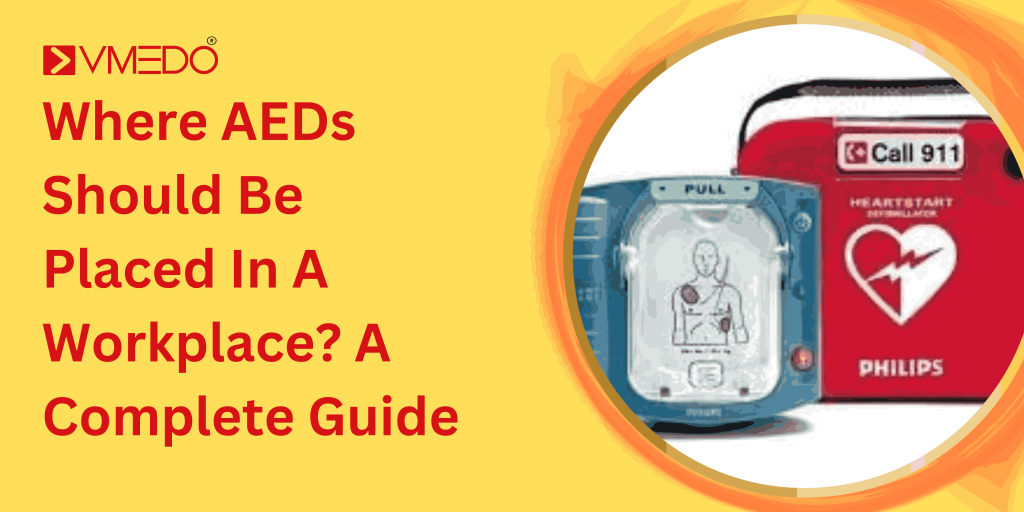
Sudden cardiac arrest (SCA) can strike anyone, anywhere—often without warning. In such situations, immediate access to an Automated External Defibrillator (AED) can mean the difference between life and death.
However, simply having an AED in the workplace is not enough. Understanding Where AEDs Should Be Placed in a Workplace is critical, as proper placement directly impacts how quickly people can access and use the device during an emergency.
This guide explores the science, guidelines, and practical considerations behind Where AEDs should be placed in a workplace, helping organizations build safer and more prepared environments.
Why AED Placement Matters
During cardiac arrest, every second counts. Survival chances decrease by 7–10% for every minute without defibrillation. Early CPR combined with timely AED use can double or even triple survival rates.
An AED works by analyzing the heart rhythm and delivering a shock if necessary to restore a normal rhythm. But its effectiveness depends on how quickly it can be brought to the victim.
This makes accessibility—not just availability—the most critical factor.
Understanding Response Time: The 3-Minute Rule
Global emergency response recommendations emphasize a key benchmark:
- An AED should be reachable and usable within 3 minutes of a cardiac arrest event.
This includes:
- Recognizing the emergency
- Retrieving the AED
- Returning to the victim
- Delivering the first shock
If an AED is too far away, locked, or hard to locate, responders lose valuable time.
Key Principles for AED Placement
To ensure effectiveness, AED placement should follow these core principles:
1. Visibility
AEDs must be placed in highly visible locations. Employees should be able to spot them instantly during an emergency.
- Use clear signage
- Avoid hidden or enclosed spaces
- Place at eye level where possible
2. Accessibility
AEDs should be:
- Unrestricted and easy to access
- Not locked away or stored in restricted areas
- Available during all working hours
In an emergency, delays caused by access barriers can be fatal.
3. Proximity to High-Risk Areas
Certain workplace zones carry higher risk due to physical exertion or population density. AEDs should be placed closer to:
- Manufacturing floors
- Gyms or fitness areas
- High-stress environments
- Areas with older employees or visitors
4. Centralized Locations
AEDs should ideally be placed in central, high-traffic areas such as:
- Reception areas
- Main corridors
- Cafeterias
- Lobbies
This ensures faster access from multiple directions.
5. Ease of Identification
AEDs should be clearly marked with standardized symbols and signage so that anyone—even a visitor—can locate them quickly.
Ideal Locations for AED Placement in Workplaces
Here are some of the most effective AED placement points:
1. Reception or Entrance Areas
- Easily accessible to visitors and employees
- High visibility
2. Production or Factory Floors
- Higher risk of physical strain and accidents
- Larger workforce concentration
3. Break Rooms and Cafeterias
- High footfall areas
- Increased likelihood of medical incidents
4. Conference Rooms and Meeting Areas
- Often occupied for long durations
- May include external visitors
5. Staircases and Elevators
- Strategic placement between floors
- Reduces retrieval time
6. Near Emergency Exits
- Easily accessible during evacuations
- Helps responders locate equipment quickly
How Many AEDs Does a Workplace Need?
There is no one-size-fits-all answer, but placement should ensure:
“Any location in the workplace can access an AED within 3 minutes”
Factors influencing the number of AEDs:
- Size of the facility
- Number of employees
- Floor layout (multi-level buildings)
- Nature of work (high-risk vs low-risk)
General Recommendation
- Small office: 1 AED may be sufficient
- Large facility or factory: Multiple AEDs distributed strategically
Special Considerations for Large Workplaces
Large or complex environments require additional planning:
Multi-Floor Buildings
- Place AEDs on every floor
- Ensure equal accessibility across levels
Industrial Settings
- Position AEDs near high-risk machinery
- Consider environmental conditions (dust, heat)
Remote or Isolated Areas
- Provide additional AEDs where response time may be delayed
Environmental and Storage Considerations
AEDs must be stored in conditions that ensure reliability:
- Avoid extreme heat or cold
- Use protective cabinets if necessary
- Ensure regular maintenance and checks
Modern AED cabinets may include:
- Alarm systems
- Temperature control
- Visibility lighting
Importance of Signage and Awareness
Even the best placement fails if employees don’t know where the AED is.
Best Practices
- Install clear directional signage
- Include AED locations in workplace maps
- Conduct awareness sessions
- Use drills to reinforce knowledge
Integration with Emergency Response Plan
AED placement should be part of a comprehensive emergency response strategy.
Include:
- CPR and AED training for employees
- Defined emergency roles
- Quick communication systems
- Regular mock drills
When combined with trained responders, AEDs become significantly more effective.
Common Mistakes to Avoid
❌ Placing AEDs in locked rooms
Delays access during emergencies
❌ Poor visibility
Hidden AEDs are as good as unavailable
❌ Insufficient coverage
Large areas without AED access increase response time
❌ Lack of training
Employees may hesitate or misuse the device
❌ Ignoring maintenance
Non-functional AEDs can lead to critical failures
Compliance and Guidelines
While regulations may vary, many global recommendations—including those from the American Heart Association—emphasize:
- Rapid accessibility
- Proper training
- Integration with CPR response
Organizations should also follow local occupational safety guidelines where applicable.
The Role of Training Alongside AED Placement
AEDs are designed to be user-friendly, but training enhances confidence and speed.
Why Training Matters
- Reduces hesitation
- Improves response time
- Ensures correct usage
- Increases survival chances
Combining AED placement with CPR training creates a strong emergency response system.
Workplace Benefits of Proper AED Placement
- Improved employee safety
- Faster emergency response
- Reduced fatality risk
- Enhanced organizational reputation
- Compliance with safety standards
Investing in AED placement is not just a safety measure—it’s a life-saving responsibility.
Placing AEDs correctly in the workplace is just as important as having them. Strategic placement ensures quick access; as a result, response time is reduced and survival outcomes during cardiac emergencies are significantly improved.
FAQs: Where AEDs Should be Placed In a Workplace
1. Where should you place AEDs in a workplace?
AEDs should be placed in visible, accessible, and high-traffic areas such as reception, corridors, cafeterias, and near high-risk zones.
2. How many AEDs are needed in a workplace?
The number depends on workplace size and layout, but an AED should be reachable within 3 minutes from any location.
3. Can AEDs be placed in locked cabinets?
No, AEDs should be easily accessible at all times without delays.
4. Are AEDs effective without training?
Yes, AEDs are designed for public use, but training improves confidence and response time.
5. Why does AED placement matter?
Proper placement ensures quick access during emergencies, which significantly increases survival chances.