Difference Between First Aid, CPR & Basic Life Support (BLS) is a topic that becomes critically important in emergency situations. In any emergency, the first few minutes can determine the outcome between life and death. Whether it’s a minor injury or a life-threatening cardiac arrest, the response provided before professional medical help arrives plays a vital role.
Understanding the Difference Between First Aid, CPR & Basic Life Support (BLS) helps individuals and organizations respond with clarity and confidence. Terms like First Aid, CPR (Cardiopulmonary Resuscitation), and Basic Life Support (BLS) are often used interchangeably—but they are not the same. Each has a distinct purpose, skill level, and application.
By clearly understanding these differences, workplaces and individuals can ensure faster, more effective emergency response when it matters most.
What Is First Aid?
First Aid refers to the initial assistance provided to a person suffering from an injury or sudden illness until professional medical help is available.
Key Characteristics of First Aid
- Focuses on immediate, short-term care
- Can be performed by any trained individual
- Covers a wide range of situations—from minor to serious
Common First Aid Situations
- Cuts, wounds, and bleeding
- Burns and scalds
- Fractures and sprains
- Choking
- Allergic reactions
- Fainting or dizziness
Goals of First Aid
- Preserve life
- Prevent the condition from worsening
- Promote recovery
First Aid is the first line of response in most emergencies and is essential in every workplace.
What Is CPR (Cardiopulmonary Resuscitation)?
CPR is a life-saving technique used in emergencies when a person’s heart has stopped beating or they are not breathing normally.
It is a specific and critical component within emergency care, especially during cardiac arrest.
How CPR Works
CPR involves two main actions:
1. Chest Compressions
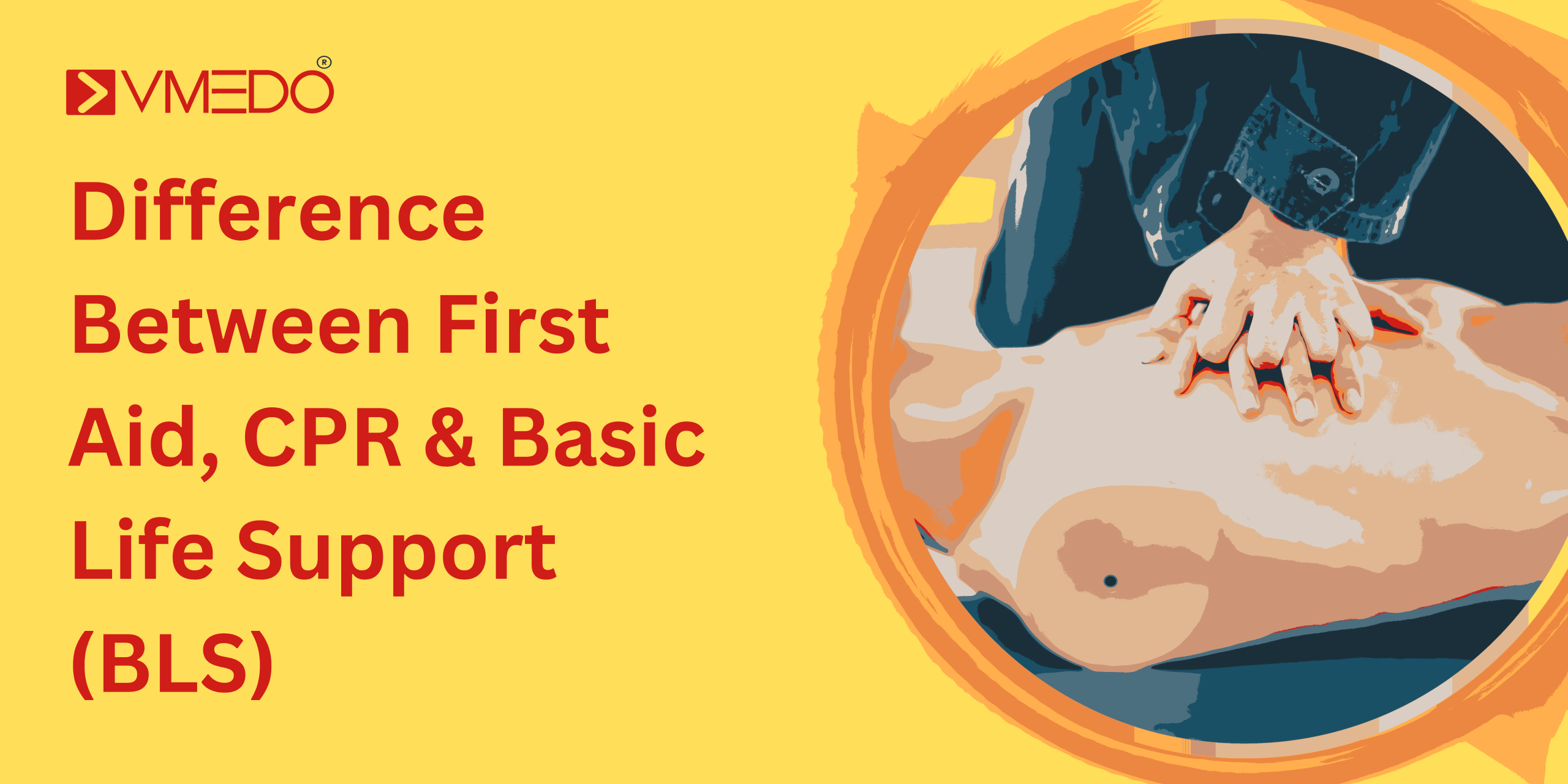
- Push on the chest at a rate of 100–120 compressions per minutes.
- Helps circulate blood to the brain and vital organs
2. Rescue Breaths (in trained responders)
- Provide oxygen to the lungs
- Help oxygenate circulating blood
According to the American Heart Association, high-quality CPR is essential to maintain cerebral and coronary perfusion.
When Is CPR Required?
CPR is performed when:
- A person is unresponsive
- There is no normal breathing
- The heart has stopped (cardiac arrest)
What Makes CPR Different from First Aid?
Unlike general First Aid, CPR:
- Is highly specific to cardiac and breathing emergencies
- Requires proper technique and rhythm
- Focuses on maintaining blood circulation and oxygen delivery
In short, CPR is a critical life-saving intervention within First Aid, but not all First Aid involves CPR.
What Is Basic Life Support (BLS)?
Basic Life Support (BLS) is a more advanced level of emergency care that includes CPR but goes beyond it.
It is typically performed by:
- Healthcare professionals
- Trained workplace responders
- Emergency response teams
Components of BLS
BLS includes a systematic approach to life-threatening emergencies:
1. Scene Safety and Assessment
- Ensure the environment is safe
- Check responsiveness
2. Activation of Emergency Response System
- Call for help or emergency services
3. High-Quality CPR
- Follow precise compression and ventilation techniques
4. Use of AED (Automated External Defibrillator)
- Analyze heart rhythm
- Deliver shock if needed
5. Airway Management and Breathing Support
- Ensure airway is open
- Provide effective ventilation
BLS follows structured protocols recommended by the American Heart Association.
Key Differences: First Aid vs CPR vs BLS
| Aspect | First Aid | CPR | Basic Life Support (BLS) |
| Definition | Immediate care for injuries/illness | Life-saving technique for cardiac arrest | Advanced emergency care including CPR |
| Scope | Broad (minor to severe conditions) | Specific to cardiac/respiratory arrest | Comprehensive life support system |
| Skill Level | Basic training | Moderate training | Advanced training |
| Techniques | Bandaging, wound care, immobilization | Chest compressions, rescue breaths | CPR + AED + airway management |
| Who Can Perform | Anyone trained | Anyone trained | Healthcare providers / trained responders |
| Equipment | First aid kit | Minimal (barrier device optional) | AED, airway tools, medical equipment |
| Goal | Stabilize condition | Maintain circulation | Sustain life and restore function |
How They Work Together in an Emergency
These three are not separate—they are connected steps in emergency response.
Example Scenario
- A person collapses →
First Aid assessment begins - No breathing detected →
CPR is initiated immediately - AED arrives and team responds →
BLS protocol is followed
This progression ensures continuous care from basic response to advanced intervention.
Why Understanding the Difference Matters
In workplaces, confusion between these terms can delay action.
Benefits of Clarity
- Faster and more accurate response
- Better coordination during emergencies
- Improved survival outcomes
- Reduced panic and hesitation
Training employees in all three ensures a layered and effective emergency response system.
Workplace Relevance: A Critical Need
In corporate offices, factories, and industrial settings, emergencies can occur unexpectedly.
Common Risks
- Cardiac arrest due to stress or underlying conditions
- Injuries from machinery or accidents
- Environmental hazards
Preparedness Measures
- First Aid training for all employees
- CPR certification for key personnel
- BLS training for emergency response teams
- Availability of AEDs on-site
Organizations that invest in training are better equipped to save lives and protect employees.
Common Misconceptions
“First Aid and CPR are the same”
No. CPR is a specific life-saving technique, while First Aid is broader.
“BLS is only for hospitals”
Not true. BLS is highly relevant in workplaces and public settings, especially where trained responders are present.
“Only medical professionals can perform CPR”
Incorrect. Anyone trained can perform CPR and potentially save a life.
The Role of Training and Awareness
Knowledge alone is not enough—practical training is essential.
Why Training Matters
- Builds confidence in emergencies
- Improves response time
- Ensures correct technique
- Reduces risk of errors
Regular training and refresher sessions help maintain readiness.
FAQs: Difference Between First Aid, CPR & Basic Life Support (BLS)
1.What is the difference between First Aid and CPR?
First Aid is general emergency care for injuries or illness, while CPR is a specific technique used when the heart stops to maintain blood circulation.
2. Is CPR part of Basic Life Support (BLS)?
Yes, CPR is a core component of BLS, along with AED use and airway management.
3. Who should learn BLS?
BLS is recommended for healthcare providers, emergency responders, and trained workplace safety teams.
First Aid, CPR, and Basic Life Support (BLS) are all critical components of emergency care—but they serve different roles.
- First Aid provides immediate, general care
- CPR focuses on sustaining life during cardiac arrest
- BLS delivers a structured, advanced response
Understanding these differences is essential for effective emergency management—especially in workplace environments.