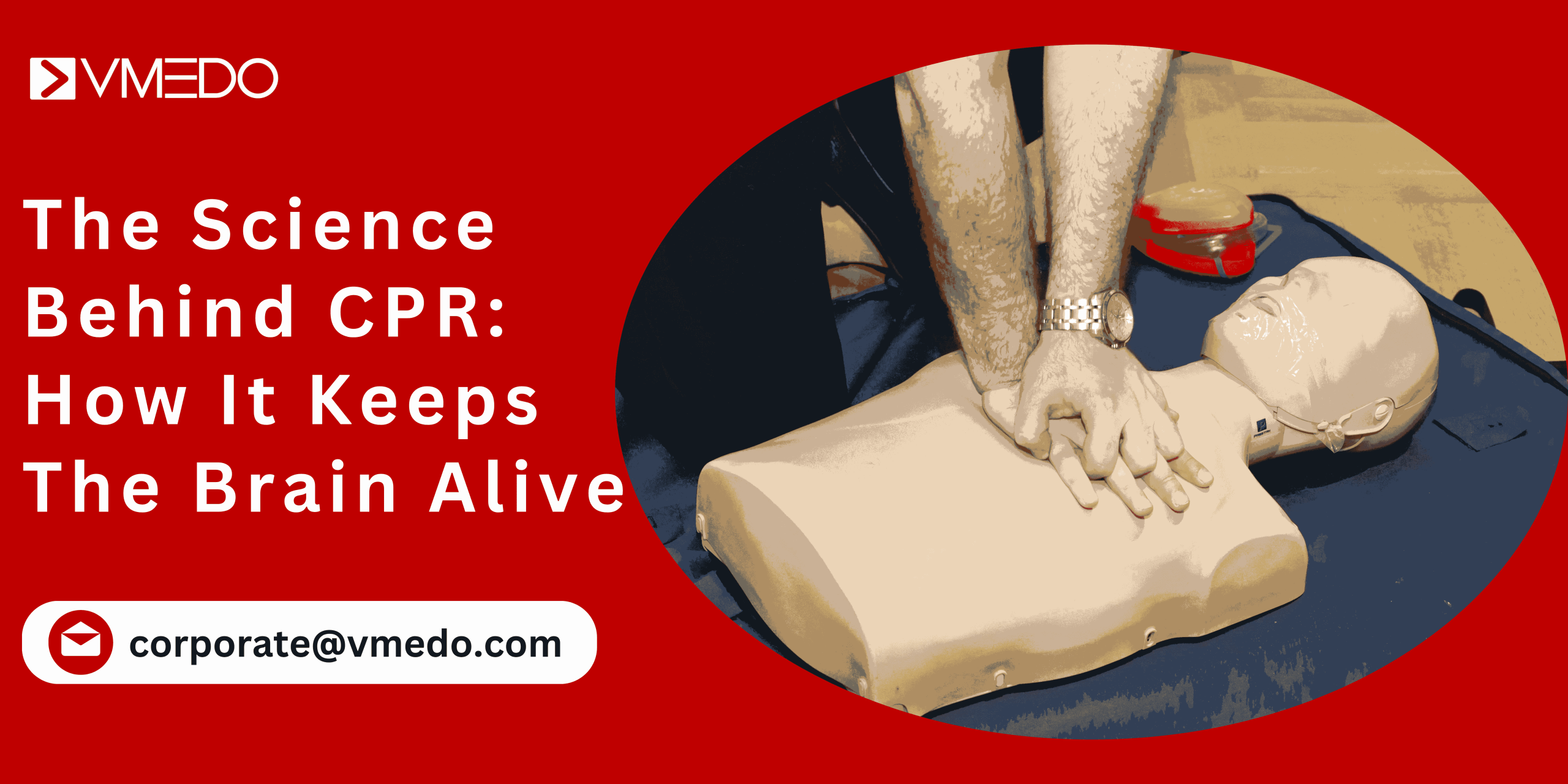
Sudden cardiac arrest is one of the leading causes of death worldwide, often occurring without warning—even in seemingly healthy individuals. In such moments, survival depends not only on advanced medical care but on immediate bystander action.
Cardiopulmonary Resuscitation (CPR) is a scientifically proven intervention that plays a critical role in these emergencies. While often misunderstood as a technique to restart the heart, CPR’s primary function is to maintain blood flow to the brain and vital organs during cardiac arrest.
This blog explores the The Science Behind the CPR: How it keeps the Brain Alive, with insights aligned to recommendations from the American Heart Association.
Cardiac Arrest: A Race Against Time
Cardiac arrest occurs when the heart suddenly loses its ability to pump blood effectively, usually due to an electrical disturbance such as ventricular fibrillation. This leads to an immediate cessation of circulation.
Impact on the Brain
The brain is highly dependent on a continuous oxygen supply:
- Within 5–10 seconds: Loss of consciousness
- Within 4–6 minutes: Risk of irreversible brain injury begins
- Beyond 10 minutes: Survival with good neurological outcome becomes unlikely without intervention
Unlike other organs, the brain has minimal oxygen reserves, making uninterrupted blood flow essential.
The Primary Goal of CPR
According to the American Heart Association, the primary objectives of CPR are to:
- Maintain cerebral and coronary perfusion
- Deliver oxygen to vital organs
- Delay cellular death
- Extend the window for defibrillation and advanced care
Importantly, CPR does not typically restart the heart—it sustains life until definitive treatment is provided.
The Physiology of Chest Compressions
Chest compressions are the cornerstone of effective CPR and must be performed with precision.
Mechanism of Action
External chest compressions generate blood flow through two key mechanisms:
- Cardiac Pump Mechanism: Direct compression of the heart between the sternum and spine. Blood is ejected from the ventricles into systemic circulation
- Thoracic Pump Mechanism: Increased intrathoracic pressure pushes blood forward. Venous return occurs during chest recoil
Together, these mechanisms create a low but critical level of circulation, particularly to the brain and heart.
High-Quality CPR: AHA Recommendations
The American Heart Association emphasizes that CPR quality directly impacts survival outcomes.
Key Parameters:
- Compression Rate: 100–120 per minute
- Compression Depth: At least 5 cm (2 inches) in adults
- Chest Recoil: Complete recoil after each compression
- Interruptions: Minimize pauses to less than 10 seconds
Even when performed optimally, CPR delivers only approximately 20–30% of normal cardiac output—yet this is sufficient to sustain brain viability for a limited time.
Oxygenation and Ventilation
Oxygen delivery is essential to prevent hypoxic brain injury.
Rescue Breaths
In trained responders:
- Ventilations supply oxygen to the lungs
- Oxygen diffuses into pulmonary circulation
- Oxygenated blood is delivered to the brain
Hands-Only CPR
For untrained bystanders, the American Heart Association recommends hands-only CPR in adult sudden cardiac arrest:
- Continuous chest compressions
- No rescue breaths required initially
This approach is effective because:
- Residual oxygen remains in the bloodstream during early minutes
- Maintaining circulation is the immediate priority
Cerebral Perfusion: The Key to Brain Survival
The ultimate goal of CPR is to maintain cerebral perfusion pressure (CPP)—the pressure gradient required to deliver blood to brain tissue.
Why It Matters
- The brain consumes ~20% of the body’s oxygen
- Neurons are highly sensitive to hypoxia
- Irreversible injury begins within minutes
CPR helps maintain partial perfusion, which:
- Delays neuronal death
- Preserves brainstem function
- Improves chances of neurologically intact survival
The Critical Role of Early CPR
The American Heart Association highlights early CPR as a key link in the Chain of Survival.
Survival Impact
- Immediate CPR can double or triple survival rates
- Each minute without CPR reduces survival by 7–10%
Early intervention maintains myocardial and cerebral viability, increasing the likelihood of successful resuscitation.
CPR and Defibrillation: A Synergistic Approach
Most adult cardiac arrests are caused by shockable rhythms such as ventricular fibrillation.
Why CPR Matters Before Defibrillation
- Maintains coronary perfusion pressure
- Improves myocardial oxygenation
- Increases likelihood of successful defibrillation
Automated External Defibrillators (AEDs) are most effective when used in conjunction with high-quality CPR.
Neurological Outcomes: Beyond Survival
Modern resuscitation science emphasizes not just survival, but quality of survival.
Without Effective CPR
- High risk of severe hypoxic brain injury
- Long-term cognitive impairment
- Reduced functional independence
With Early, High-Quality CPR
- Improved neurological outcomes
- Higher likelihood of full recovery
- Better quality of life post-resuscitation
This underscores the importance of timely and effective intervention.
Special Considerations
When Ventilation Is Critical
While hands-only CPR is effective in many adult cases, rescue breaths are essential in:
- Pediatric cardiac arrest
- Drowning incidents
- Respiratory causes of arrest
In such cases, oxygenation becomes the primary issue, not just circulation.
Workplace Readiness: A Life-Saving Imperative
In corporate and industrial environments, cardiac emergencies can occur without warning. Preparedness is critical.
Essential Measures
- CPR and First Aid training for employees
- Deployment of AEDs in accessible locations
- Clearly defined emergency response protocols
Organizations that invest in preparedness significantly improve survival outcomes and demonstrate a strong commitment to employee safety.
CPR is a scientifically grounded, life-saving intervention that plays a crucial role in preserving brain function during cardiac arrest.
By maintaining circulation and oxygen delivery, CPR:
- Sustains cerebral perfusion
- Delays irreversible brain injury
- Extends the window for successful resuscitation
Aligned with the principles of the American Heart Association, early and high-quality CPR remains one of the most powerful tools in emergency response.
FAQs: The Science Behind CPR: How It Keeps the Brain Alive
1. Does CPR restart the heart?
No. CPR does not usually restart the heart. Its primary role is to maintain blood circulation and oxygen delivery to the brain and heart until advanced care—such as defibrillation—can restore a normal rhythm.
2. How does CPR help the brain alive?
CPR helps by maintaining partial blood flow (cerebral perfusion) to the brain. This ensures that oxygen and glucose continue to reach brain cells, delaying irreversible damage and improving the chances of recovery.
3. How long can the brain survive without oxygen?
- Loss of consciousness occurs within 5–10 seconds
- Brain injury can begin within 4–6 minutes
- Severe damage becomes likely beyond this without intervention
Immediate CPR can significantly extend this window.
4. What is hands-only CPR and when should it be used?
Hands-only CPR involves continuous chest compressions without rescue breaths. According to the American Heart Association, it is recommended for untrained bystanders in adult sudden cardiac arrest cases.
5. Is hands-only CPR as effective as conventional CPR?
In adult cardiac arrest of cardiac origin, hands-only CPR is highly effective in the first few minutes. However, in cases like drowning, children, or respiratory arrest, CPR with breaths is more beneficial.
6. What is the correct compression rate and depth?
As per the American Heart Association:
- Rate: 100–120 compressions per minute
- Depth: At least 5 cm (2 inches) in adults
- Recoil: Allow full chest recoil after each compression
High-quality compressions are critical for maintaining blood flow.
7. How much blood flow does CPR actually provide?
Even with optimal technique, CPR provides only about 20–30% of normal blood flow. However, this is sufficient to delay brain cell death and sustain vital organ function temporarily.
8. Why is immediate CPR so important?
Every minute without CPR reduces survival chances by 7–10%. Early CPR helps:
- Maintain brain viability
- Improve defibrillation success
- Increase overall survival rates
9. Can performing CPR incorrectly cause harm?
While improper technique may reduce effectiveness, doing something is far better than doing nothing. The risk of serious harm from bystander CPR is low compared to the risk of not acting.
10. When should rescue breaths be given?
Rescue breaths are especially important in:
- Children and infants
- Drowning cases
- Respiratory emergencies
In these situations, oxygen deprivation is the primary cause, making ventilation essential.
11. What is the role of an AED during CPR?
An Automated External Defibrillator (AED) analyzes the heart rhythm and delivers a shock if needed. CPR helps maintain circulation, while the AED works to restore a normal heart rhythm.
12. Can CPR guarantee survival without brain damage?
No, but early and high-quality CPR significantly improves the chances of neurologically intact survival. Outcomes depend on multiple factors, including response time and underlying cause.
13. Who should learn CPR?
Everyone. Cardiac arrest can occur anywhere—homes, workplaces, or public spaces. Training employees and individuals ensures a faster and more effective emergency response.
Understanding the science behind CPR reinforces a simple but powerful message:
Immediate action saves not just lives—but brain function.
At VMEDO, we empower workplaces with the knowledge, training, and infrastructure needed to respond effectively to medical emergencies.
Train your teams. Equip your workplace. Act with confidence.
Because when cardiac arrest strikes, every second of action protects the brain—and saves a life.